Eden and the End: Heaven’s Gate in Rancho Santa Fe
The only downside of their home’s 4.6 million dollar view for the art-collecting couple were the occasional “looky-loos” gathered around the gate next door to their quietly idyllic home in Rancho Santa Fe. Oftentimes, strangers came clamoring to the gate for a peek at the house, the neighbors’ house that just so happens to stand on the site of America’s largest mass suicide.
A two-lane bridge lends coastal access to one of the wealthiest enclaves in San Diego’s North County where the idea of a "gentleman's estate", developed into a city in which CEO's, stars and old money retreat behind acres of plush hills and dense thickets of green– insulation for hushed conversations and clandestine meetings. Once entered, it stretches for miles in a windy maze of bewildering congruence.
In March of 1997, 39 people lay dead in this house in a number of rooms. All of the dead had matching bowl haircuts, and wore black tunics with patches that read “Away Team” on the left shoulder. They had packed their bags neatly beside them, and tucked $5 dollar bills and seventy-five cents in quarters into their shirt pockets. They all wore black nylon pants and black and white Nikes. All but two had a silky purple shroud in a diamond shape covering their face and most had a plastic bag tied over their heads. Some were on the floor and others were on cots or beds with their hands at their sides. Their suicide potion was barbiturate-laced applesauce and pudding, and after washing it down with a hefty pull of vodka, they all lay down, awaiting death and transcendence.
This was how they prepared for their trip: ready for the arrival of an interplanetary flight to heaven, believing it would arrive with the Hale Bopp comet. At the time of their death, the comet’s path had reached its closest proximity to Earth. Behind its twin blue-and-white tails, they believed, was a spaceship, the vehicle of their transcendence.
All of the 39 dead were members of Heaven’s Gate, a more than 20-year-old UFO religion and cult, and this suicide was the “exit” of their decades-long odyssey. An eerie stillness washed over the house as their lungs filled with Rancho Santa Fe’s crisp, early springtime air for the last time.
***
March 26, 1997. Four days since the deaths began– It was an overcast Wednesday afternoon; an indecisive drizzle sprinkled on and off over the mansions of Rancho Santa Fe. Droplets rippled the calm surface of swimming pools into numberless concentric circles. A coastal wind reared inland, whooshing through acres of wild blond grass, impenetrable brush, and eucalyptus trees whose branches hung like leafy tentacles, swaying in the breeze. Punctuating the untamed landscape were perfectly manicured lawns, metal gates guarding long driveways, backyards with tennis courts and swimming pools, a surfeit of golf greens, and millionaires who had traded bumper to bumper inner city madness for manorial playgrounds.
This is why San Diego District Attorney Paul Pfingst paused after receiving the news. An anonymous caller had tipped off the police from a payphone–a terrifyingly large number of bodies were lying dead inside one of the untouchable mansions. At first, the call was thought to be a prank.
“This is regarding a mass suicide. I can give you the address,” the caller said.
Pfingst was sent to the scene to provide sheriffs with a search warrant. So far, ten bodies had been counted; the first-responding officers had exited the house and called for backup.
Pfingst arrived at the site. It was a typical Rancho Santa Fe mansion: a monstrous 9,200-square- foot cream colored house with seven bedrooms, 7 1/2 baths and red tiled roof that was in the style of but not quite like the fabulous romantic Spanish aesthetic of Rancho Santa Fe’s origins. Red bougainvilleas in full bloom flanked the entry gate. A line of waxy black and white cars snaked up the “S” shaped driveway to the luxurious tomb, with its windows shut, its shades drawn, and its outdoor light fixtures buzzing in the daylight. Palm trees lined the brick porch of the mansion’s front entrance, its stairs leading down to floral plantings and bushes in plots behind the lawn that surrounded the property. As Pfingst approached the house, the breeze shifted, and a putrid smell of rotting corpses sickened him. The group’s suicide was, it turned out, performed in three day shifts, and it had been four days since the first 15 suicides, three days since the second 15 suicides, and two days since the final 9 suicides. Of those who died, three were in their 20s, two in their 30s, twenty in their 40s, eight were in their 50s, four were in their 60s, and one woman was 72.
A crew of sheriffs, officers and men in suits huddled around the scene as Detective Rick Scully organized his team. Law enforcement was panicked. The neighbors were panicked. Protocols for catastrophes like this did not exist. There was talk of boobie traps, trip wires, and that smell. Could it be poison gas? Would a trip wire cause the house to burst into flames? With no assurance of a safe entry to evacuate the bodies, according to Pfingst, they discussed their options at length, speculating about the potential malice that awaited behind the mansion doors. ***
1960s and 70s California was home to the disillusioned. The belief that America’s government, its core beliefs, and its social norms had steered people wrong became hard to ignore in the post-WWII era. Beatnik literature and new music genres inspired a departure from convention towards new spiritual and sexual ideas, and the U.S. involvement in the Vietnam War and Nixon’s Watergate scandal further angered the nation. This discontent propelled a counterculture movement across the decades, characterized by a generalized rebellion against the American government and what they called 'the establishment.' It had brought in its wake an era of spiritual and cultural upheaval. Their Free Love ideology seeped steadily out from northern California’s Haight Ashbury in San Francisco into spiritual camps and communes that established themselves throughout California and the nation at large. The New Age religious movements that had gained tens of thousands of followers in Europe had already begun making headway in the United States, fueling the curiosity of the spiritually parched. New Age religions were a smorgasbord of marginalized ideas, synthesizing the different approaches to self-improvement among many religions; scholars of such things thought that many of these groups could be classified as cults or at least as “cultic.” Various New Age religions of the counterculture era, as well as hippies, were interested in particular non-western religious texts as sources of inspiration for their own ideologies, such as the Bhagavad Gita among other South Asian manuscripts. It was a time that was ripe for all kinds of fantasizing, theorizing, and belief, and from such a roiling vat of ancient and new ideas, Heaven's Gate was conjured.
Bonnie Lu Nettles, a founder of Heaven’s Gate, was born in 1924 in Houston Texas, raised Baptist, and was a product of New Age religious thinking. She was a registered nurse, married, and had four children. Before she and a partner established Heaven's Gate, she was a member of the Theosophical Society of America, a group that dates from the late 1800s in the U.S. and whose mystical ideas, Buddhist- and Brahmin-adjacent teachings, and theories about galactical alien religious intercession on Earth, influenced the concepts and goals of certain new age groups and cults. For seven years, Nettles belonged to the TSA, and she and her daughter Terrie would talk late into the night, gazing at the sky for potential UFO sightings. Their conversations consisted mostly of astrology, Spiritualism and Theosophy and bonded them so tightly that the day Bonnie Nettles decided to leave family life and a crumbling marriage behind in search of her own religious destiny, Terrie was left feeling hurt and utterly mystified. Bonnie Nettles died twelve years before the mass suicide and after the event, Terrie, then 44 and a production assistant in L.A., told the Associated Press that “The only thing [the cult members] discussed before my mom's death was a UFO coming to get them. All this talk about the suicide, the weird haircuts, that was nothing that my mom would have ever partaken in.’’
Marshall Herff Applewhite, the other founder, was the son of a Texas Presbyterian minister. He briefly attended seminary, he became a music professor at the University of Alabama in Tuscaloosa and St. Thomas University in Houston where he specialized in choir and baritone opera, struggled with sexual guilt, and was fired twice for having affairs with his students: first with a young man, then a woman. His wife took the two kids and moved away. Shortly after, his father died. Applewhite moved in with a man and entered a phase of "severe upheaval and personal confusion," as he later described in his 1988 Heaven's Gate treatise, a synopsis of the cult’s history posted to the group’s website.
When Bonnie Nettles met Marshall Applewhite in March of 1972, sparks flew in possibly the most unromantic way; they became each other’s spiritual counterpart. After a near death experience brought Applewhite to the hospital where Bonnie Nettles worked as a nurse, she convinced him “that God kept him alive…She sort of talked him into the fact that this was [his] purpose -- to lead these people -- and he took it from there'', said Lousie Winant, older sister of Applewhite to the New York Times. Terrie Nettles was 19 at the time this new relationship wrecked her family. While camping near a place called Gold Beach in Oregon, Bonnie and Marshall’s "awakening" took a great leap. They decided they were the “Two Lampstands” mentioned in the Book of Revelation, that are thought to represent the shedding of spiritual light throughout the land, and they began to call themselves “The Two” (though they went by several other “doubles” names throughout the years including Guinea and Pig, Bo and Peep, and finally Ti and Do). They were eternal beings, so they imagined, reincarnations of Jesus and God returning to Earth inhabiting human bodies—well-behaved human bodies that did not drink, smoke or have sex.
In their early awakening, Nettles and Applewhite also studied Theosophy. As part of its spiritual pedagogy, Theosophy taught that human life’s purpose is spiritual emancipation and reincarnation of the soul after death. The Theosophical Society, founded as an occult group, produced its own writings by its founder Helena Blavatsky, and The Two focused on Blavatsky's The Secret Doctrine. For reasons that are unclear, by the time The Two gained a following, Applewhite firmly renounced any New Age teachings as stated in the writings on the Heaven’s Gate website, and refused to acknowledge the cult’s own base in its beliefs.
By 1973, Ti (Nettles) and Do (Applewhite) had laid out their core beliefs and decided it was time to seek followers. Making their way around the country, they proselytized in New Age bookstores and elsewhere, to anyone who would listen. With no financial sustenance they took odd jobs, begged for money, borrowed credit cards, and once stole a rental vehicle, which resulted in criminal records for The Two and six months jail time for Applewhite. “It might be interesting to note that during Do's trial, because of the judge's awareness of the peculiar circumstances surrounding the arrest, the judge ordered a psychiatric examination. Although Do passed it with flying colors, not a 24-hour period slipped by that he didn't question his own sanity,” Do said about himself in his 1988 heaven’s gate treatise. A surviving member gave similar chilling details about his conversations with the leader, “He said that there wasn’t a day that went by that he didn’t think of himself as insane.”
After Applewhite’s release, The Two decided that credit cards along with most government and capitalist systems were evil– a plot run by the Luciferians, or the fallen angels on Earth who actively tried to poison the minds and prevent people from reaching heaven. This was not that eccentric an opinion to have in the 1960s and 1970s, when many young people opposed capitalism, its consumerist tendencies, and anything related to “the establishment”.
Heaven’s Gate (originally named HIM, an acronym for human individual metamorphosis) was one of the many quasi-religious cult movements like People's Temple of Jim Jones that pulled together huge numbers of young people who were part of the counterculture, and already searching for a spiritual following. From 1975-76, The Two completed some of their first major recruitments just 40 minutes south of San Francisco, the alembic of counterculture. The earliest followers, or rather “students” of Ti and Do, held meetings at the Stanford University campus in Palo Alto, California on August 13, 1975. Posters were then printed for the August 24th meeting a few cities over at Cañada College in Redwood City reading “UFOs. Why they are here. Who they have come for. When will they leave.” At Cañada College, Ti and Do made their first public appearance, and the auditorium was filled to capacity, the room buzzing with anticipation. These two meetings along with one in North Hollywood were their largest and most successful; according to Ti and Do’s notes posted to their website, some meetings held up to 800 people. It became clear that California seemed like the best target for their UFO religion, but unlike the hippies of the counterculture movement, Applewhite, Nettles, and their dedicated followers seemed to be suffering from various degrees of mental illness or emotional distress. Afterwards, they used these followers to aid them in proselytizing across 43 states, and among their first students were a diverse array of people, including a nurse, a doctor's wife, a rancher, a real estate broker, an actor, an artist, a film editor, a technical writer, a computer programmer, a bartender, and environmentalist, as well as numerous college and post-graduate students. Like many alienated people back then, The Two and many other "enlightened" Heaven’s Gate adherents believed that the world was on the brink of imminent collapse, using this urgency to encourage people to act fast and join them before it was too late.
Heaven’s Gate was portrayed in the media as a crazy cult, The National Enquirer interviewed Ti and Do, and the New York Times Sunday Magazine did a cover story on them. They were heckled constantly, always aware that their “classroom” was viewed by America as being a cult. They ignored the rest of the world, believing the media to be another Luciferian plot. On April 21, 1976, in a Kansas college auditorium, the heckling and humiliation reached such a level that Ti announced that "the Harvest was closed”--there would be no further gathering of followers. During the next seventeen years, the group didn’t proselytize, and essentially fell off the grid. At this point, after all that recruiting and teaching and preaching, the group had reached 100 followers, and over the next few years, slowly diminished.
In his 1988 treatise, Applewhite wrote: “The class ... has recognized that during the course of our classroom the concepts we believed in seemed to change almost as fast as our locations. However, we continued to believe in certain things consistently all along the way.”
In a nutshell, Nettles and Applewhite, were intent on ridding themselves and their disciples of their “humanness” in order to reach their goal of being transported one day by spacecraft to the Kingdom of Heaven—or what they called The Level Above Human (T.E.L.A.H.). Because Ti and Do were already next level beings reincarnated, they would show people the way to salvation. At night, members would take shifts scanning the sky for UFOs, waiting for the spacecraft that would come to pick them up. On several occasions Ti and Do told the group the day for their departure had arrived, but to no avail. The Two preached a radical doctrine, demanding that adherents sever ties with their families and past lives, renounce all earthly attachments and desires, embrace celibacy, and rigorously discipline themselves. Members were instructed to sit outside with tuning forks, focusing on the sound for hours in an attempt to clear their minds. In 1978, all the members changed their names to two syllable words ending in “ody” such as Alxody, Gldody, Chkody, Slvody, Qstody etc. in an effort to detach their enlightened selves from their once dormant past “vehicles” or bodies. The group likened their journey to Hindu ascetics seeking liberation from the cycle of rebirth, believing that their bodies were mere vessels to be discarded upon death. Those who had not yet accepted the Heaven’s Gate way of life were soulless “mammalian plants”, only to receive pieces of their soul the closer they approached enlightenment. Members’ were promised that their success would lead to transformation into eternal, genderless extraterrestrial beings, and as a result, imminent salvation. To guard their way of life, or rather, to keep them indoctrinated, Ti and Do enforced monastic practices, cloistering themselves to focus on cleansing their minds of malevolent influences of the outside world. These influences were attributed to "Luciferians" sabotaging human evolution. For this reason, they spent the next 20 years hidden from the world, skeptical of government and social institutions from family to mailing addresses to bank accounts, never staying in one place for too long. As time went on, Do realized more and more that Ti was the reincarnation of a more advanced member of the Next Level than he was, and their relationship was viewed as Do being the Father and Ti being the Grandfather.
The group’s most valuable instrument in upholding their practices was the constant use of a "check partner." Check partners were individuals who shared the same desires and goals, but between them there existed no physical or romantic relationship. As the name suggests, check partners oversaw and monitored everything their partners did, policing each other at all times. Ti and Do were always each others’ check partner, but rotated members to avoid them forming attachments. Do was also always aware that his check partner Ti was breaking their own rules, calling and sending Terrie letters every so often, but divulging very little of her life and focusing her attention mostly on her daughter.
Ti died of liver cancer in 1985. Her death rocked the group's beliefs, as her passing contradicted their promise that their physical bodies would be picked up in a spacecraft. In response, Applewhite provided this justification:
“We could say that because of the stress, due to the gap between her Next Level mind and the vehicle's genetic capacity, that the cancer symptom caused the vehicle to break down and stop functioning.”
Following Ti’s death, Do began telling the group that actually they would be “shedding” their “vehicles” (leaving their bodies behind) in order to reach the next level. He began to consult the group about other ways they could possibly achieve this. Months later Do sent Terrie a package of audio cassette tapes explaining how her mother had died.
In 1993, The cult placed a one-third-page ad in USA Today to recruit their final members, this time using the Internet to spread the message. By 1996, Heaven’s Gate, who had spent several months living in a compound in a remote New Mexico, decided to relocate for good. They had become aware of what was to be their extra terrestrial vehicle, their comet that would be passing through Earth’s field of vision for the next 18 months: Hale-Bopp.
As it turns out the best view of the comet could be found in the Northern Hemisphere, and Heaven’s Gate had their ideal zip code in mind.
***
By the fall of 1996, Heaven’s Gate had relocated to Rancho Santa Fe. The mansion they rented was nestled in the southern section of the city at the top of a small hill. Rancho Santa Fe is characterized by hills, streams, and saltwater and freshwater lands bordered by vistas of mountains and ocean. Lily J. Rice, the original architect of Rancho Santa Fe was hired to create a high luxury, cohesive design of the first homes and city buildings such as the school. She believed in using the finest materials, and preserving the land’s rustic charm while incorporating elements of Spanish Revival and adobe-style buildings into its mansions’ architecture. Besides Rice’s original scenic designs, the uniqueness of Rancho Santa Fe lies in the evolution of this planned community once coupled alongside old agricultural plantations. It was constructed in the 1920s and within the first year after purchasing a plot of land at RSF, the wealthy homeowners were required either to cultivate ⅓ of their acreage with some kind of crop, or build a house there. Through Rice's visionary approach, Rancho Santa Fe developed over the years into a haven where wealthy individuals sought to commune with nature and experience the peace and charm of the quiet city she had built.
But before Rice, Rancho Santa Fe had a rather dark history. Alongside its construction, John Steven McGroaty, a famous California writer, sought to write RSF’s literary history which he called The Endless Miracle of California. In his piece, he describes entering the city’s rolling hills once owned by the King of Spain and gifted to Don Maria Osuna as a land grant in the “brave old days of happiness and contentment and peace and plenty”. From adobe, Osuna built what he hoped would be his family’s ancestral home on the high points of these hills, before he expired and passed them on to his son, Leandro. McGroaty speculates that Osuna was likely buried at a mission in San Diego, “where there was a Padre, a book and bell, and candles to light souls to heaven.”
Not long after came the American invasion of California as a result of the war against Mexico, and Leandro thought it his duty to fight. But after losing the battle of San Pasqual, he put a bullet through his head with his own hand.
Little did McGroaty know that only a few decades later, a group of 39 would try to find their own way to heaven and die at their own hands in the hills of Rancho Santa Fe.
“So it was there in the sheltered clasp of the sunny hills… with the tang of the sea to stir their blood, they reared the rafters of their home…but which still did not shut it out from the sea’s deep voices nor from the life-giving breath of its billows… and maybe you will feel their fine old spirits whispering to you of the past when summer stars hang low and night winds stir among the branches of ancient pepper trees that hands long since folded planted in the springtime of hope when life was young.”
***
“They looked so serene,” commented one of the officers who uncovered the scene. Deputies Robert Brunk and Laura Gacek were the first ones to arrive according to CNN.
"It was almost like it wasn't real," Brunk said.
"Even though we knew entering the building that there was going to be death inside from the smell outside ... we just didn't know the magnitude," Gacek said.
Detective Scully had decided to send in a hazmat team, in yellow suits with body cameras, to enter and record the scene. Once they exited the house everyone gathered around a screen to watch a VHS tape with the footage. The audio of detective Scully could be heard at the start. “Sheriff’s department with a search warrant demanding entry!”
At this moment, their priority was to confirm what the anonymous caller had told them: that this tragedy had not been a homicide. The team’s justling plastic suits could be heard as the camera panned from room to room. The house had no decorations and was filled with foldable furniture–tables littered with computer equipment and cheap plastic lawn chairs arranged in a semi-circle in the living room. Metal bunk beds, cots, and mattresses on the floor left little personal space, the walls of the house had little personality, and all decorations remained exactly as the group had found them upon moving in according to Stella Nixon, the former owner. They saw the methodically packed bags in the same ritualized fashion with which the group lived their lives– it was easy to imagine them parceling through what little belongings they found precious, unzipping their bags in collective silence, telling themselves that in a matter of hours, they could find eternal happiness and never look back. In the bags were identification like passports that made it easier to identify the dead and contact their families.
Eventually, it was agreed that there was no evidence of struggle or homicide, and to put the neighbors at ease, Pfingst said, the video of the men in hazmat suits entering the house was released to the public within hours. Overnight, the image of shrouded figures in black and white Nikes was pictured on televisions across every major news channel in America. Later, a replica of how the bodies were found was reconstructed at the Sheriff’s Museum in Old Town, San Diego.
***
The legacy of Heaven’s Gate lives on a glowing screen. The group's website, which is still live, stands as a testament to the power of their beliefs, and up until recently, remaining members actively responded to the email message system left behind by the group. Videos and written content posted to the website and labeled “Bookmarks to Vital Information” chronicled the messages from Do and the other 39 members. In its digital confines, the cult's vision of the "Level Above Human'' was immortalized, a millennial flight to a celestial realm beyond mortal comprehension.
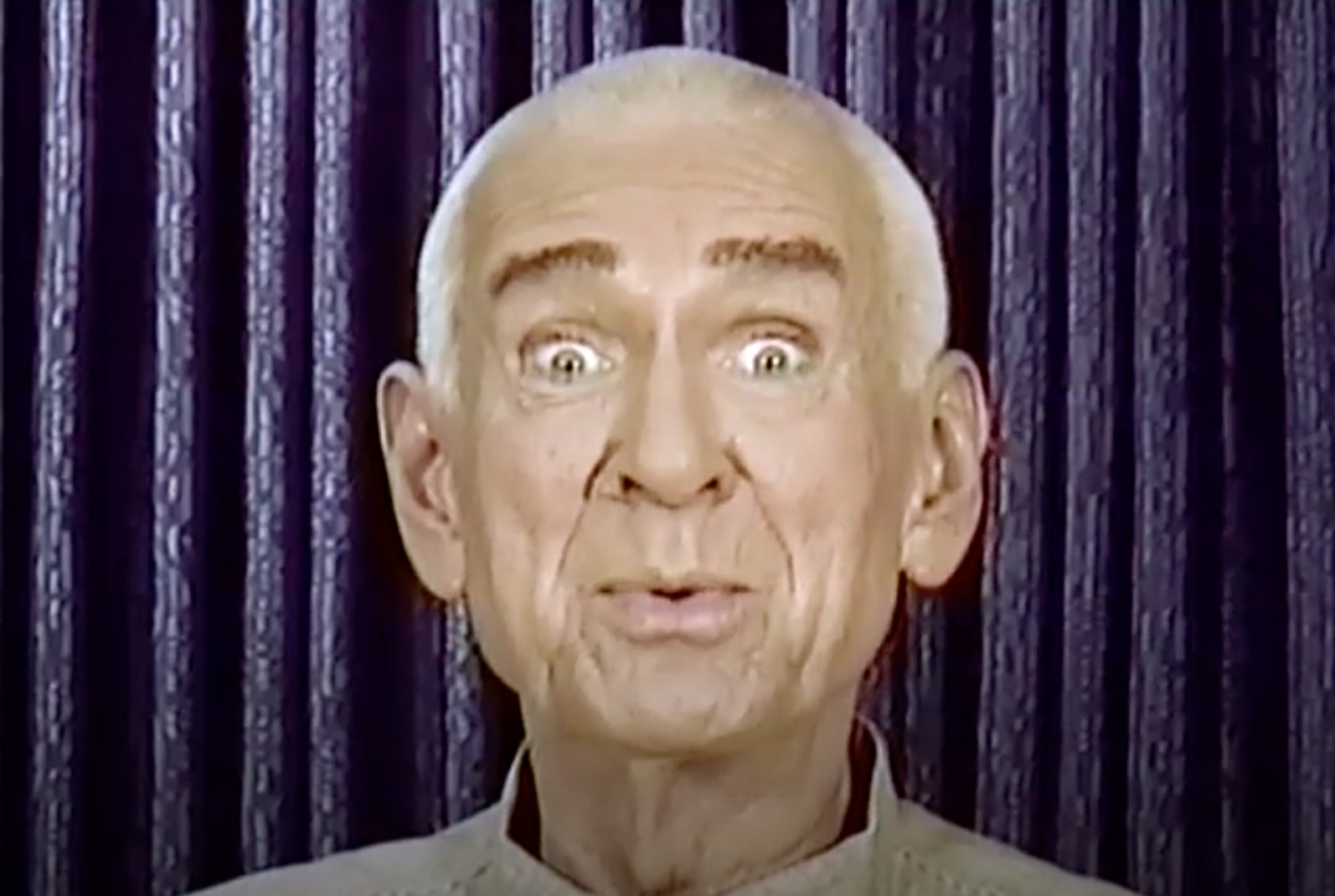
In his final videotaped messages, “Planet Earth is about to be recycled,” and “Do’s Final Exit”, Applewhite spoke with a hypnotic fervor. Blue eyes wide and empty, hair white and buzzed, and razor thin eyebrows raised to his hairline, he urged his followers to evacuate to the heavenly realm before Earth's impending recycling. Members also left their own legacies: a compilation of interviews with each of the members they called “exit videos”, a macabre testament to the cult's ultimate sacrifice, revealing a collective delusion woven through years of indoctrination. Like a broken record, the members repeated each other's ideas as if fearful to say something different– a clear reflex after years of check partners.
One member said, gesturing to his own body: "You know, these are like vehicles. I mean if you use the analogy of a car and, you know, people may keep their cars for a long time before they finally wear out and conk out and they die on 'em and, you know, they go and get another car. . . . I mean that's all we're talking about. It's not a big deal."
These video postings were made possible through one of the group’s members who had left behind his own computer company to join the cult and was largely responsible for the creation of the Heaven’s Gate personal website. These skills became all the more profitable as Heaven’s Gate funded their mansion in Rancho Santa Fe with their World Wide Web computer and design business called the Higher Source. In many ways, their use of technology was way ahead of its time, worthy of the billion-dollar companies that now call the area home.
For Higher Source, several members of the house were chosen to work. Every morning they would leave in their van, crockpot in hand, and travel to a rented space from 8-5, where they had computers to complete their web design work. Their clientele encompassed a nearby polo club and a British dealer of automobile parts. They would eat from their crock pots at their desk and take no breaks throughout the day. Their routines largely informed the creation of an alien language that would help them prepare to one day live on a spacecraft. Leaving the house to earn money became: engaging in out of craft tasks to earn sticks. The Kitchen was known as the nutri lab, their food was fuel, their houses were crafts, their bodies were vehicles, their sexual organs became plumbing, their underwear were seat covers, and the washing machines were fiber labs. Even though their beliefs were far out, like the belief in an evil one world government, or that the FBI was stalking them, most of the members were incredibly bright and people who crossed their paths noted their affability.
On weekends they ate at the Pancake House or Marie Callenders always ordering the same thing: "Dutch babies," a German-style pancake, and grapefruit juice or turkey pot pie with iced tea and cheesecake. When asked by a waiter at Pancake House where they came from, one of them replied “From the car.” In almost every instance in which the group came in contact with the outside world, the response was positive. They were courteous and polite, and “seemed loving”. They celebrated holidays and committed their parties to film. In one video clip of a Christmas party, Do taught them a carol to sing together, and afterwards, in the same plastic living room auditorium where they received their lessons from Do, a sort of talent show was prepared by volunteers. Afterwards they ate together– people were smiling and laughing and joking with one another. If not for the strange matching get ups and haircuts, one could mistake it for a normal party.
All that the group did was in preparation for reaching the next level. In their bathrooms, bottles of vitamins were clearly marked for each member of the house. They took good care of their “vehicles” in order to avoid premature death (dying before the arrival of the spaceship). They used sign in and sign out sheets for everything from meals to a specific towel use to clean themselves after waking up with a nocturnal emission. The group’s anti-sex position pushed a third of the 39 men to be castrated. On the Heaven’s Gate website, Applewhite expressed his wish for all of the group to receive sex change operations but thought it would arouse too much suspicion.
One night they went out to buy a telescope to try and spot the spaceship that would bring them to the next level. When no spaceship was found, they returned the telescope to the store only days later claiming that it was broken, and justified among themselves that the spaceship must not be visible because it was trailing behind the comet. Still, they remained confident that Hale-Bopp was their ticket from this evil world.
***
The sun hung low in the sky, casting long shadows over the sprawling estate of Rancho Santa Fe. The quiet nature of Rice’s architectural legacy proved perfect for Heaven’s Gate’s needs. It was a place designed to be an escape, a sanctuary for the rich and famous seeking refuge from the hustle and bustle of Hollywood and Beverly Hills. It was a place where anyone who could snag a house there could disappear into the shadows, shielded from prying eyes and probing questions. And so it was that Rancho Santa Fe became not just a haven for the elite, but a haven for the disaffected, drawn to its quiet streets and gated communities like moths to a flame. Among them was Sam Koutchesfahani, a man with a penchant for shady dealings and a taste for the finer things in life.
Sam Koutchesfahani, who owned the palatial mansion that Heaven’s Gate eventually rented, found himself mired in financial troubles. Unable to sell the property, he resorted to renting it out to the Heaven’s Gate group for a hefty sum, turning a blind eye to the whispers neighbors spoke in hushed tones of Koutchesfahani's peculiarities, his jokes about renting his home to monks, and the strange vans with New Mexico license plates that came and went in the dead of night. Applewhite had long decided that only a limited number of members were allowed to enter and exit the homes they stayed in for fear of arousing the neighbors’ suspicions, and for this reason likely circulated at odd hours of the night. But in a community where privacy was prized above all else, no one dared to pry too deeply into his affairs.
It wasn't until the authorities descended upon the mansion, uncovering a grim tableau of death and deception, that the truth began to emerge. Koutchesfahani, it turned out, was not just a landlord with a penchant for eccentric tenants; he was a crook in desperate need of the cash that Heaven’s Gate offered him to lease the house.
***
When the house was secured, the extraction of bodies began and soon the choppers could be heard overhead in the distance. From where the mansion stood on a hill, Pfingst looked down to see a trail of dense traffic snaking up toward the house from LA’s freeways to the quiet city.. A caravan of news trucks, movable studios with big video cameras, ladders and other equipment blocked Rancho Santa Fe’s coastal entryway up the street to the Heaven’s Gate house. The place quickly lit up as every local and national news flocked to the scene. It was media pandemonium. Was it so far off that another Charles Manson could be looming in the area? After all, Californians were used to their fair share of crazy. For the last year, the Heaven’s Gate cult had dropped in on California from all parts of the nation, the state where they’d always been quite well received, and they took Rancho Santa Fe completely by surprise.
“How many people could be so crazy to think that they’re going to go kill themselves and be on a comet and take off into the universe,” Pfingst said in an interview now, 25 years post suicide. His once strawberry blonde hair had gone completely white. “It was head scratching, like: where would you find these people? These people were not, as far as I know, on anyone’s radar … I think they found a house that had privacy and also space for their web design stuff.”
The media interprets this loss of life as a total disaster, that Heaven’s gate was a group of people who had completely lost their minds–and isn’t the media’s portrayal the way most people understand what had become of Heaven’s Gate anyways? Others are more sympathetic, expressing that Heaven’s Gate had their own non-traditional, spiritual path. Cult experts and psychologists are certain that most of these people had been found at emotionally vulnerable points in their life, and even when they returned to reality, struggled to fit in, ultimately returning to the cult.
They likely misunderstood themselves and were unsure what to make of their world, so they took part in creating this new and much smaller world, turning to leaders who could make sense of the uncertain. In our current age of artificial intelligence, rampant misinformation, political polarization, and the erosion of trust in institutions, people can relate to the desire for clarity and certainty that drove others to seek refuge in simpler, more defined ideologies.
Ultimately, what failed them was the disgust and disgrace that they held for their humanity and the world– their humanness and their differences were not something to be grateful for or celebrated but something they were trying to escape. Rather than become a force of good, empowered by their collective, they cowered from the world and from one another. They shut down and closed their doors, looking nowhere but up for confirmation until their comet arrived.
And when it finally did, the arrival of Hale-Bopp was reminiscent of the past.
The story goes that in 1910, Halley’s comet passed and some thought the world was coming to an end. Newspapers were warning people that scientists theorized the comet’s ability to snuff out existence as they knew it. Mark Twain died in 1910, but what's strange is he was also born the year the comet first arrived –1835. Before he died he said:
"It is coming again next year, and I expect to go out with it. It will be the greatest disappointment of my life if I don't go out with Halley's comet. The almighty has said, no doubt: 'Now here are these two unaccountable freaks; they came in together, they must go out together.'"
A San Francisco Chronicle journalist for the religion beat recalled something from Twain’s writing when covering the Heaven’s Gate scandal.
Twain, who was a cynic when it came to religion, wrote that, "The fare to get to heaven on the tail of a comet was $5.75." This was the exact amount found in their pockets when the bodies were discovered.
Post a comment